
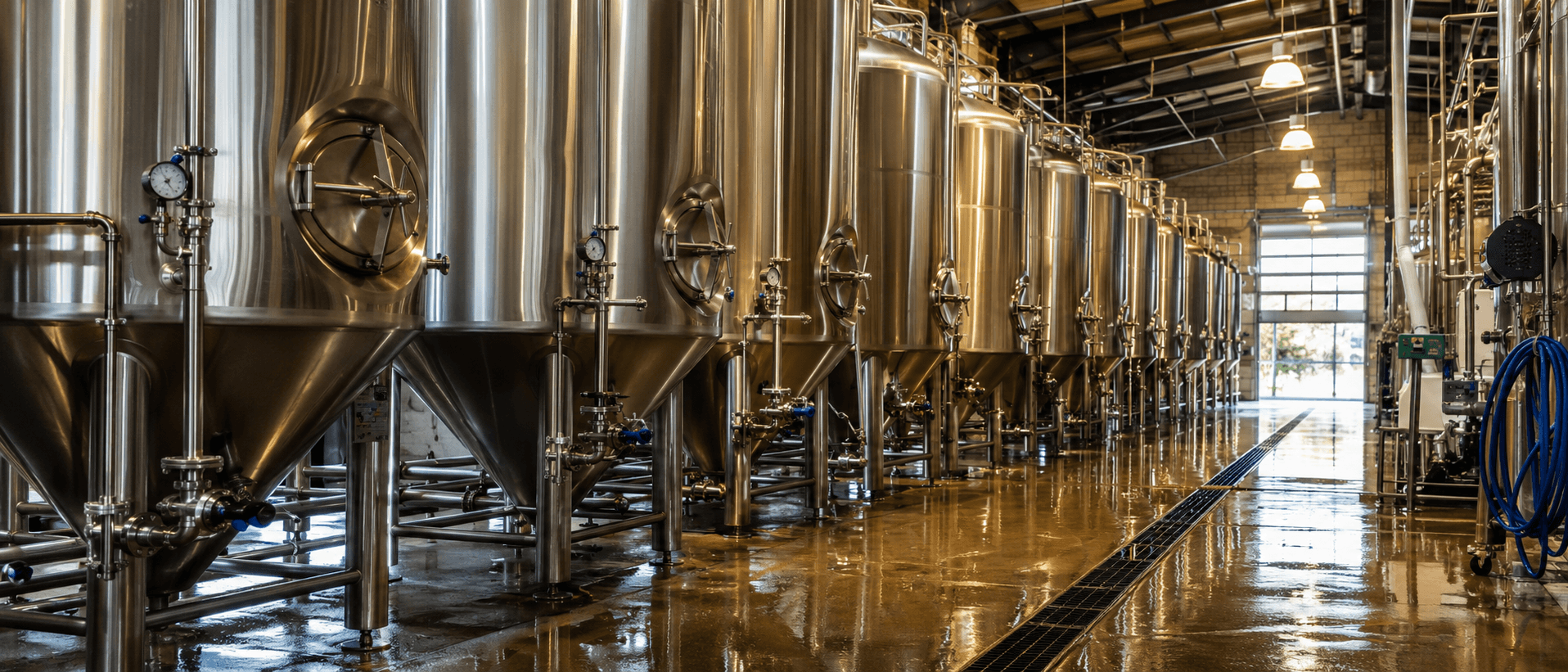
Equipment for East Africa's brewing and distilling growth.
Fermenters, mash tuns, bright tanks, malt silos, distillation supports, and the structural and instrument equipment around them. Sized from craft (50 HL) to industrial (5,000 HL+).
Brewery and distillery scale-up call for different considerations.
Brewing buyers tend to be in growth mode. The line is at ceiling, the brand is moving, and capacity needs to land before the next peak season. The spec is straightforward: sanitary stainless, the right jacket geometry for temperature control, fittings that match the existing CIP loop.
Distillery buyers are more careful. Containment matters, bonded-warehouse requirements matter, and the buying conversation often involves a regulator. We work the same equipment scope either way; the difference is in the documentation we issue alongside the equipment.
Four scope buckets.
Craft brewing
Equipment fit: SS 304/316L, grain silos, level + temp + pressure
Mash tuns, lauter tuns, fermenters, bright tanks, malt silos sized for craft volumes (50 to 500 HL).
Industrial brewing
Equipment fit: SS 304/316L, large silos, full instrument stack, structural
Larger fermenters, bright tanks, and supporting structural fabrication for breweries operating at 5,000 HL+ capacity.
Distilling
Equipment fit: SS 304/316L, structural, temperature + pressure instruments
Pot still pedestals, condenser supports, intermediate spirit tanks. Fabrication around your column geometry.
Containment and effluent
Equipment fit: Epoxy-lined tanks, ETP equipment if discharge-side
Spent-grain handling, bottling-line effluent collection, CIP caustic recovery tanks.
Sized from craft to industrial. 50 HL brewhouses to 5,000 HL and beyond.
Craft floor
50 HLMash tuns, lauter tuns, fermenters, bright tanks at craft volumes.
Industrial ceiling
5,000 HL+Larger fermenters and bright tanks with the structural fabrication around them.
Scope buckets
4Craft brewing, industrial brewing, distilling, containment and effluent.
Four reasons brewing and distilling operators call us.
- 01
Brand scale-up
Product is moving and the line is at ceiling. New fermenters, bright tanks, and the silos to feed them.
- 02
New SKU introduction
Premium-line, lager-to-stout expansion, or a seasonal product. Spec is usually material-driven (sanitary fittings, jacketed temperature control).
- 03
Distillery containment
Spirit storage capacity, bonded warehouse, condenser cooling water tanks. Compliance-and-safety driven.
- 04
Effluent compliance
Brewery and distillery effluent is high-strength. Triggers ETP scope when the local regulator notices.
The buying frame · Alcohol & Distilling
“We work the same equipment scope either way; the difference is in the documentation we issue alongside the equipment.”