
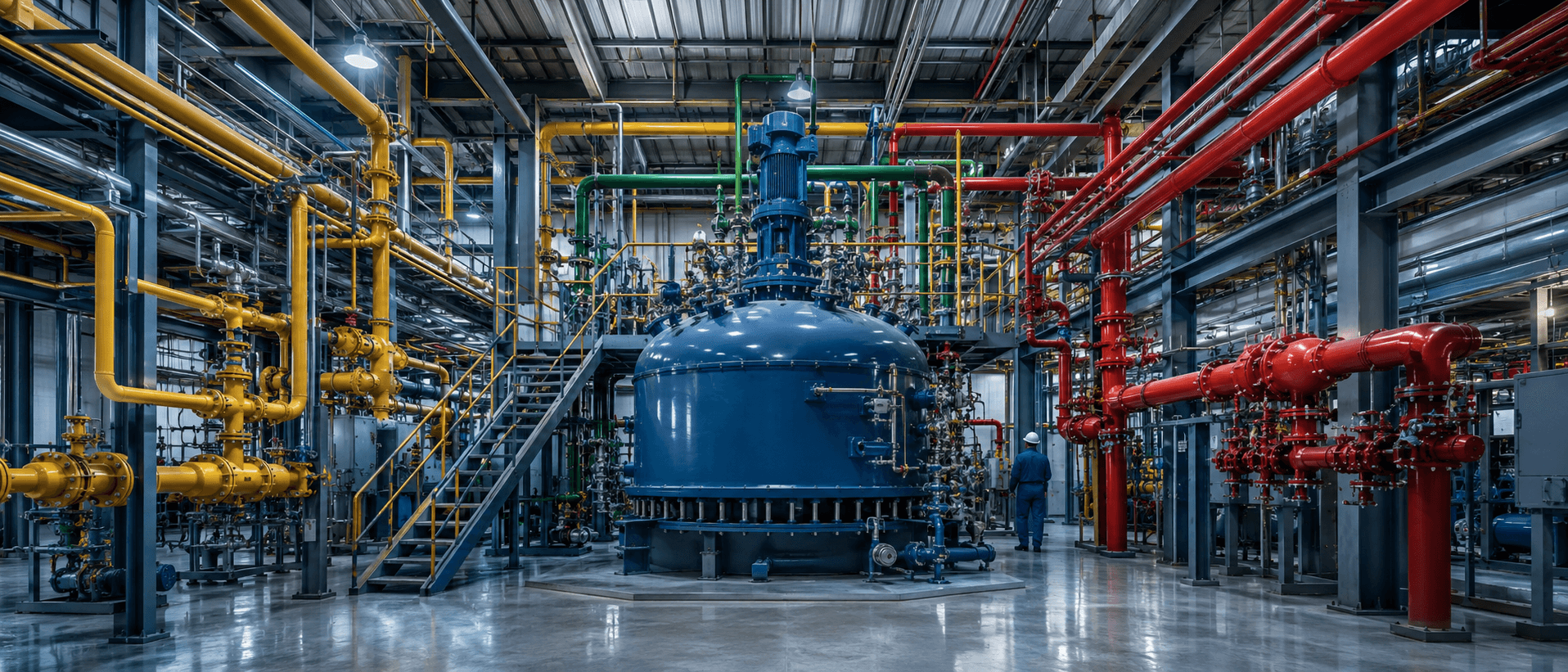
Equipment specified for the medium it stores.
Epoxy-lined and stainless storage tanks, dosing tanks, reactor support structures, and pressure and temperature instrumentation for chemical processing plants across East Africa. Materials are selected to match the chemistry involved.
Material selection starts with the chemistry involved.
Chemical processing buyers care less about brand and more about whether the tank will survive the medium for its full design life. The conversation usually starts with chemistry: medium, concentration, temperature, cycle frequency, and contamination tolerance.
From there the equipment decision is structured. Most of the dilute-acid and alkali duty lands in epoxy-lined steel, with the lining grade picked to the specific medium. The exceptions go to stainless 316L. Hastelloy or other exotics come up rarely and we source those for the specific brief.
Four scope buckets.
Acid and alkali storage
Equipment fit: Epoxy-lined tanks, ATEX-rated instrumentation where applicable
Dilute acid (sulphuric, hydrochloric, phosphoric) and alkali (caustic) bulk storage with picked-to-medium lining.
Chemical dosing
Equipment fit: Epoxy or stainless, flow + level + pressure instruments
Day tanks for plant chemicals, polymer preparation, neutralisation dosing loops.
Reactor and process support
Equipment fit: Structural fabrication, SS 316L, pressure + temperature instruments
Structural platforms around reactors, condenser supports, intermediate storage between unit operations.
Containment and safety
Equipment fit: Epoxy-lined or SS, leak-detection level sensors, bund-area drainage
Bunded containment tanks, leak-detection sumps, secondary-containment liners for spill control.
Equipment specified to match the medium it stores. Materials are selected based on the chemistry involved.
The exception grade
316LWhere the chemistry rules out epoxy lining, the duty goes to stainless 316L.
Scope buckets
4Storage, dosing, reactor support, containment and safety.
Four reasons chemical operators call us.
- 01
New product or process line
A new chemical product or downstream processing step adds reactors and storage. Spec is material-driven, picked to the chemistry.
- 02
Containment upgrade
Safety audit identifies a single-walled tank carrying corrosive material, or insufficient bunding. Triggers replacement on a strict timeline.
- 03
Compliance with chemical-handling regulations
OSH-style regulator, fire safety, or environmental authority flags a gap that touches tank, pipe, or instrumentation.
- 04
Capacity expansion
Existing reactors at ceiling. Replacement or addition of process vessels and the structural and instrumentation work around them.
The buying frame · Chemical Processing
“Chemical processing buyers care less about brand and more about whether the tank will survive the medium for its full design life.”