
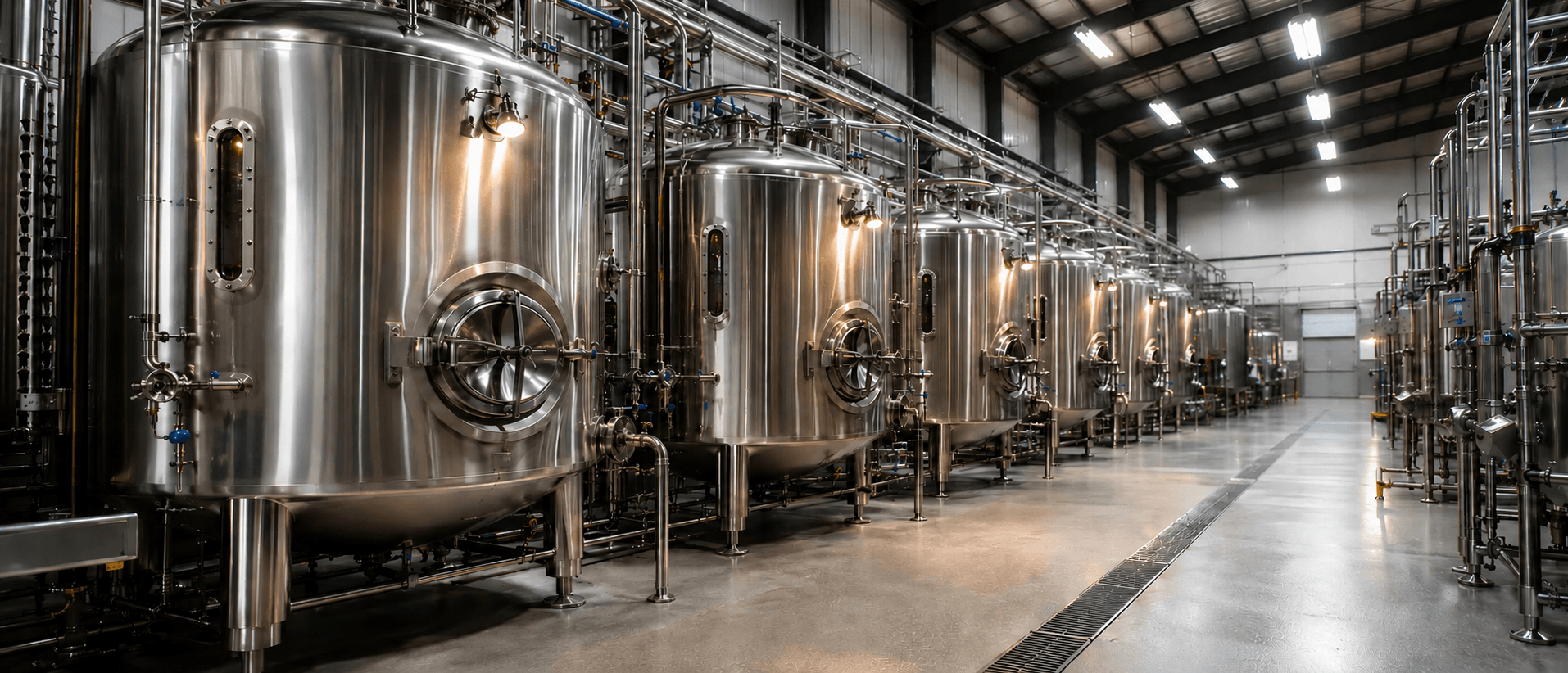
304 and 316L stainless tanks, built for food, beverage, and process duty.
North Star Impex fabricates the default tank for any process where the medium will touch food, pharma-adjacent product, or a corrosive aqueous environment, for plants across East Africa. We TIG-weld with argon backing, finish to your Ra requirement, and pre-tap for the instruments you want.
The right grade for the medium you store.
304 is the workhorse. Use it for dairy processing, beverage filling, edible oils, and the majority of food-contact applications. It handles chlorides up to roughly 200 ppm without pitting.
316L adds molybdenum for chloride resistance. Use it for whey concentrates, acid CIP loops, pharmaceutical- adjacent duty, and any process where you expect repeated contact with halogen environments. The low-carbon variant resists weld-zone sensitization in CIP cycles.
Both grades are fabricated locally, TIG-welded with argon backing on the inside surface, and dye-penetrant tested on every seam before passivation.
TIG, argon-backed · dye-penetrant tested on every seam
The numbers that matter on procurement.
Every spec below is the standard. Anything outside the range is doable; tell us what you need and we'll quote it.
- Material grades
- 304 (general), 316L (chloride / corrosive)
- Capacity range
- 1 to 500m³
- Wall thickness
- 2 to 6mm
- Internal finish
- Ra ≤ 0.8 µm (food contact), Ra ≤ 0.4 µm (pharma-adjacent)
- External finish
- Mill, brushed, or mirror polish
- Weld certification
- TIG with argon backing, dye-penetrant tested
- Design pressure
- Atmospheric to 6bar
- Standard fittings
- Tri-clamp manway, sanitary drain, CIP spray ball, sight glass, temperature port
- Instrumentation ports
- Pre-tapped for level, temperature, pressure, and pH
- Lead time
- 4 to 8 weeks ex-works, depending on capacity
Where stainless earns its premium.
Dairy
Milk silos, jacketed processing tanks, CIP loops. 304 for general dairy, 316L for whey concentrates and acid wash environments.
Beverage
Bright tanks, syrup tanks, blending tanks, water polishing tanks. Sanitary tri-clamp throughout.
Edible oils
Refining tanks, deodorising vessels, intermediate storage with jacketed heating loops.
ETP & process water
Final-stage polishing tanks where corrosion resistance and clean discharge matter more than initial cost.
Every seam TIG-welded with argon backing, dye-penetrant tested before passivation.
From 1 m³ dosing vessels to 500 m³ storage.
Atmospheric to 6 bar, to the duty on the brief.
304 for general duty; 316L past ~200 ppm chlorides.
Every stainless tank we install can be connected to a remote-monitoring app, personalized to your site.
Level, temperature, pressure, and pH read out to a phone or browser, with alarms routed to whoever you nominate, over NB-IoT, LoRaWAN, 4G, or Ethernet.
See how remote monitoring works →Read-out coverage
- · Tank level (radar, ultrasonic, hydrostatic)
- · Temperature (RTD or thermocouple)
- · Pressure (gauge or absolute)
- · pH and conductivity
- · CIP cycle timing and verification
Ra finish guidance · food-contact duty
“Finer than that and you’re paying for finish you don’t need; coarser and bacterial harborage becomes a real CIP risk.”
What buyers ask before specifying a stainless tank.
When should I choose 316L over 304 for a stainless tank?
What is the typical lead time for a stainless tank?
What internal surface finish should I specify for food contact?
Are the tanks CIP-ready out of the box?
What else you might be looking at.
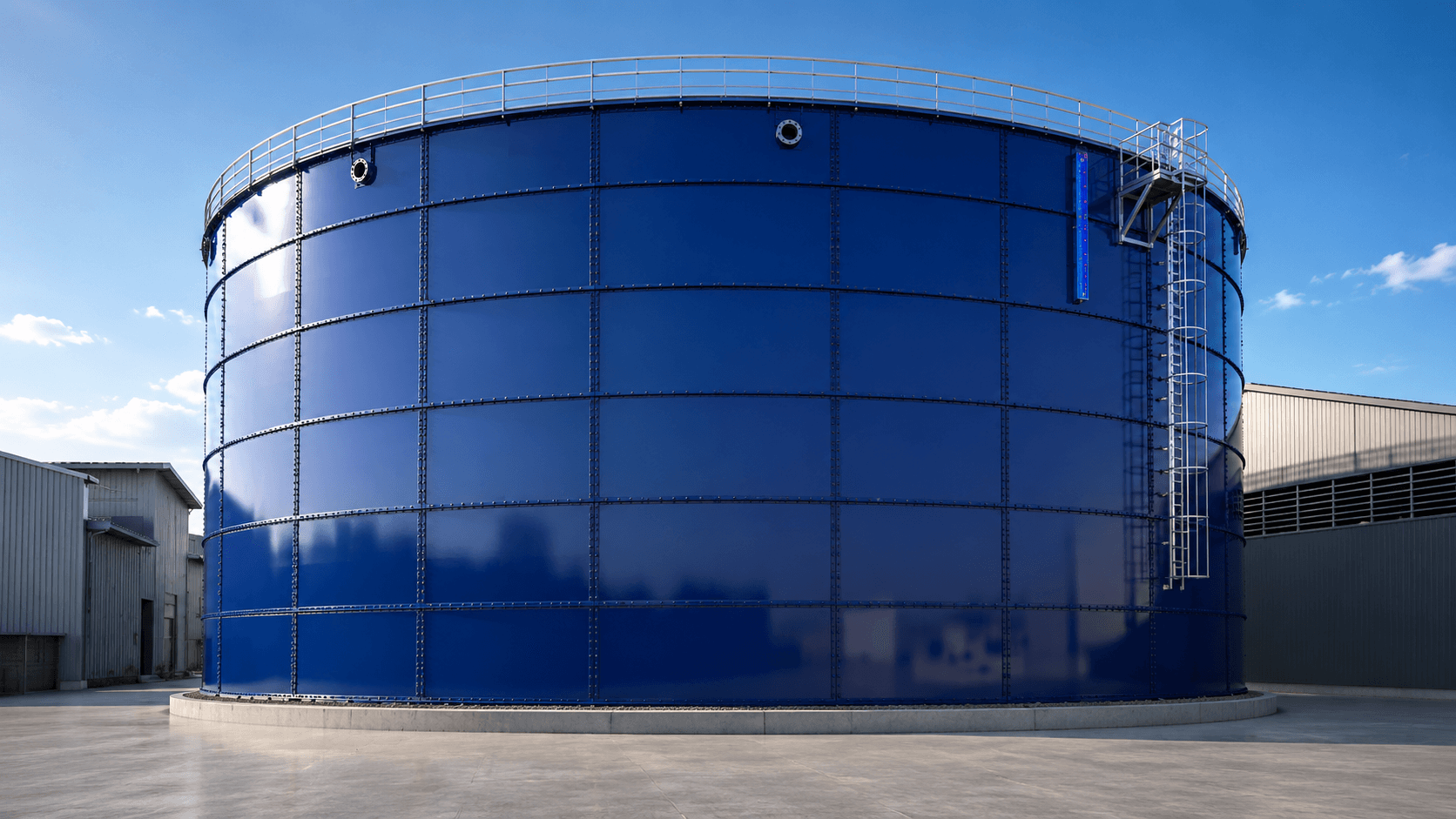
Epoxy-lined tanks
Carbon-steel shells with chemistry-matched linings for ETP dosing and acid storage.
Explore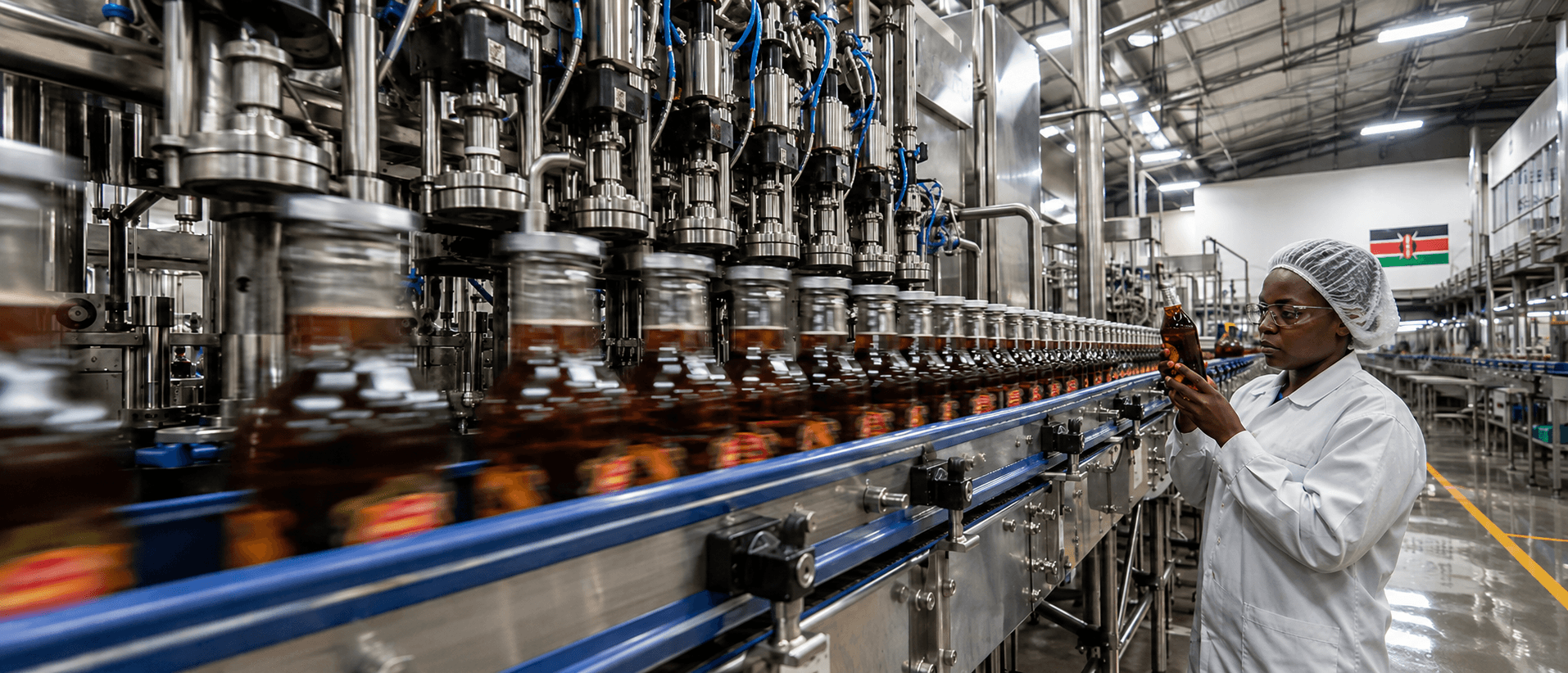
Food & beverage equipment
Where most of our 304 and 316L tanks land. Dairy, brewing, edible oils, bakery.
Explore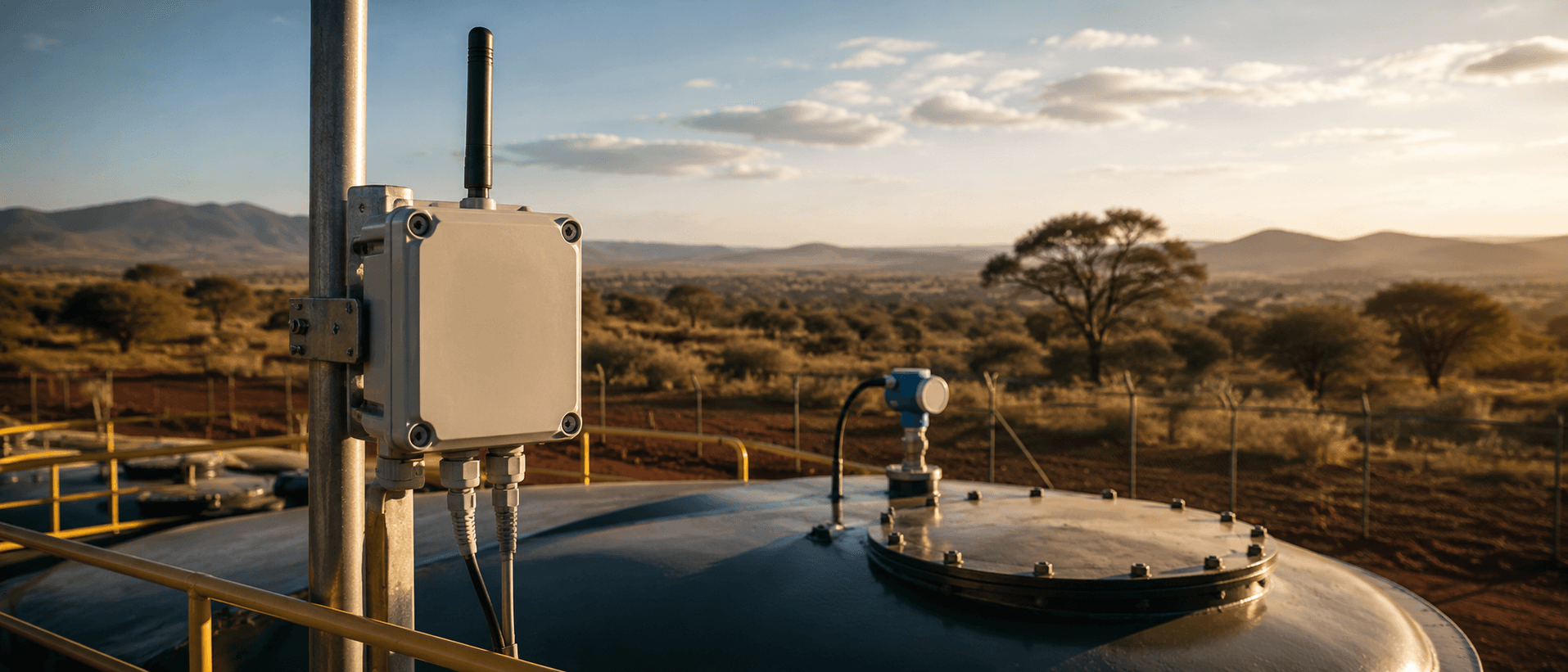
Cloud-ready monitoring
Wire level, temperature, pressure, and pH on any stainless install to a phone or browser.
Explore