Remote monitoring, available on every install.
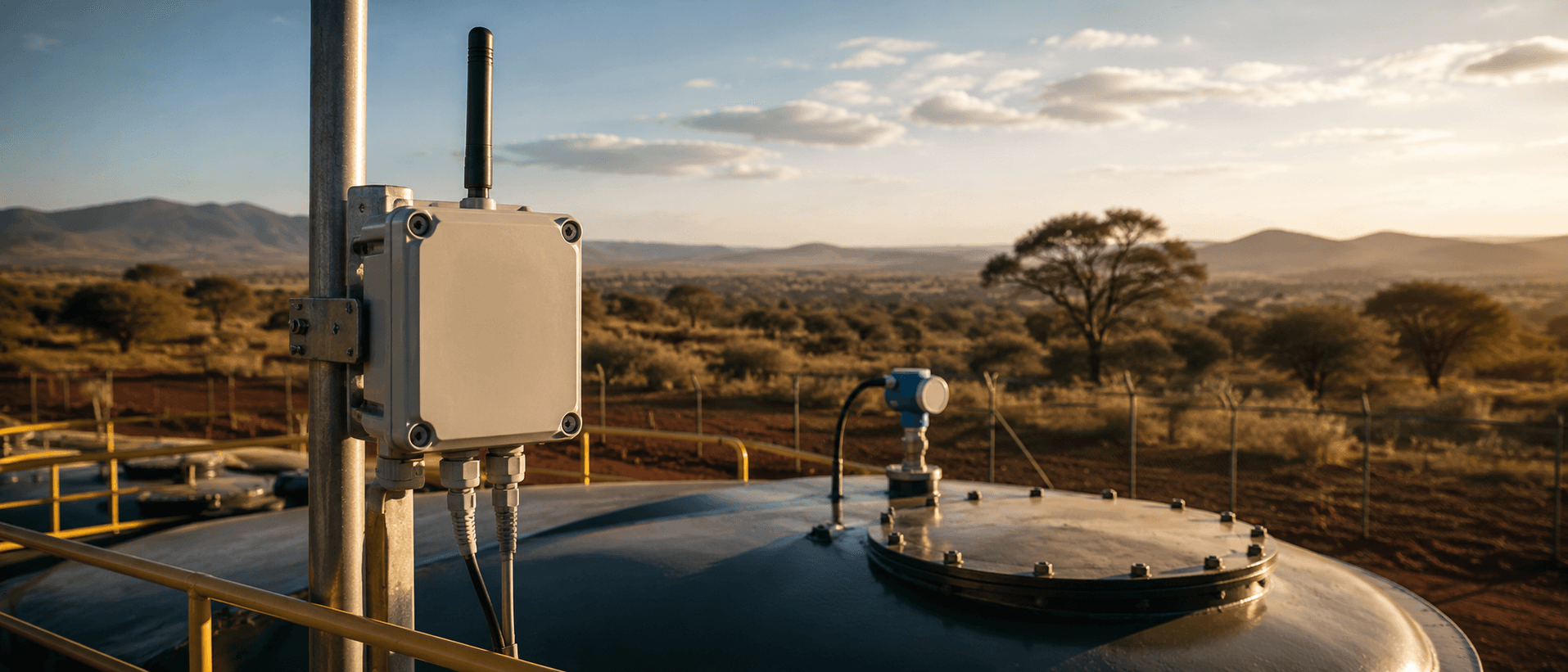
Every tank and instrument we install can be connected to a remote-monitoring app, personalized to your site. Live values, trends, and alarms, from a phone or a browser.
Every tank and instrument North Star Impex installs can be connected to a remote-monitoring app, personalized to the customer's site — cloud-ready oversight of tank level, flow, pressure, temperature and water quality, viewable live from any phone or browser. The path is simple: an instrument feeds an on-site gateway, which uploads to a time-series store hosted on North Star Impex's infrastructure or yours, then to a responsive dashboard with trends and alarms. Four networks are supported and sized to the site: NB-IoT (the default for single-tank, low-bandwidth sites, with a 3–5 year primary battery at 15-minute reporting), LoRaWAN (one yard gateway for 20+ instruments), 4G LTE (real-time SCADA streaming), and Ethernet/Wi-Fi. Data is secured with TLS 1.3 in transit and AES-256 at rest, with role-based audited access and no third-party sharing; export is by CSV, JSON or Modbus-over-TCP.
Four steps, from installed instrument to live dashboard.
Instrument
Any flow, level, pressure, water-quality, or temperature instrument we install.
Gateway
An on-site gateway that polls your instruments and packages the data for upload.
Cloud
A time-series store hosted on your infrastructure or ours, your choice.
Your app
A phone or browser dashboard with live values, trends, and alarms.
From sensor to your dashboard.
The path every reading takes on a real install — instrument, gateway, time-series store, then a dashboard on your phone. The figures beside it are the defaults we size to.
One reading every 15 minutes — the cadence we size batteries to.
Three to five years at the default cadence; hourly reporting pushes past five.
One yard gateway covers 20+ instruments at lower per-instrument operating cost.
NB-IoT, LoRaWAN, 4G LTE, Ethernet / Wi-Fi — we size the radio to the site.
Stream: instrument → gateway → cloud → your app
Four dashboard screens, built for plant operators.
Single-tank dashboard
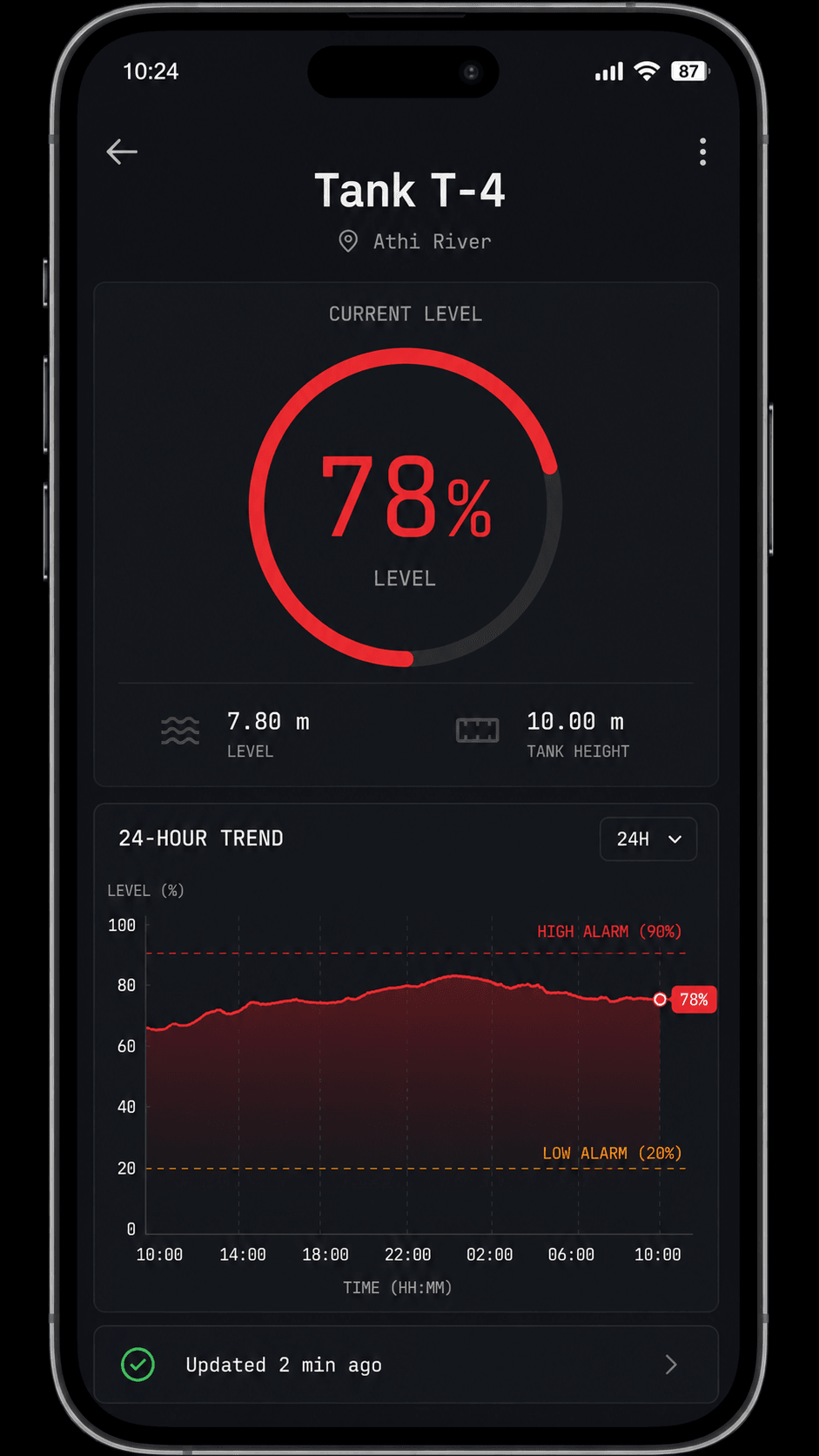
Phone dashboard for one tank: level, 24h trend, alarm thresholds, last refresh
Multi-site overview
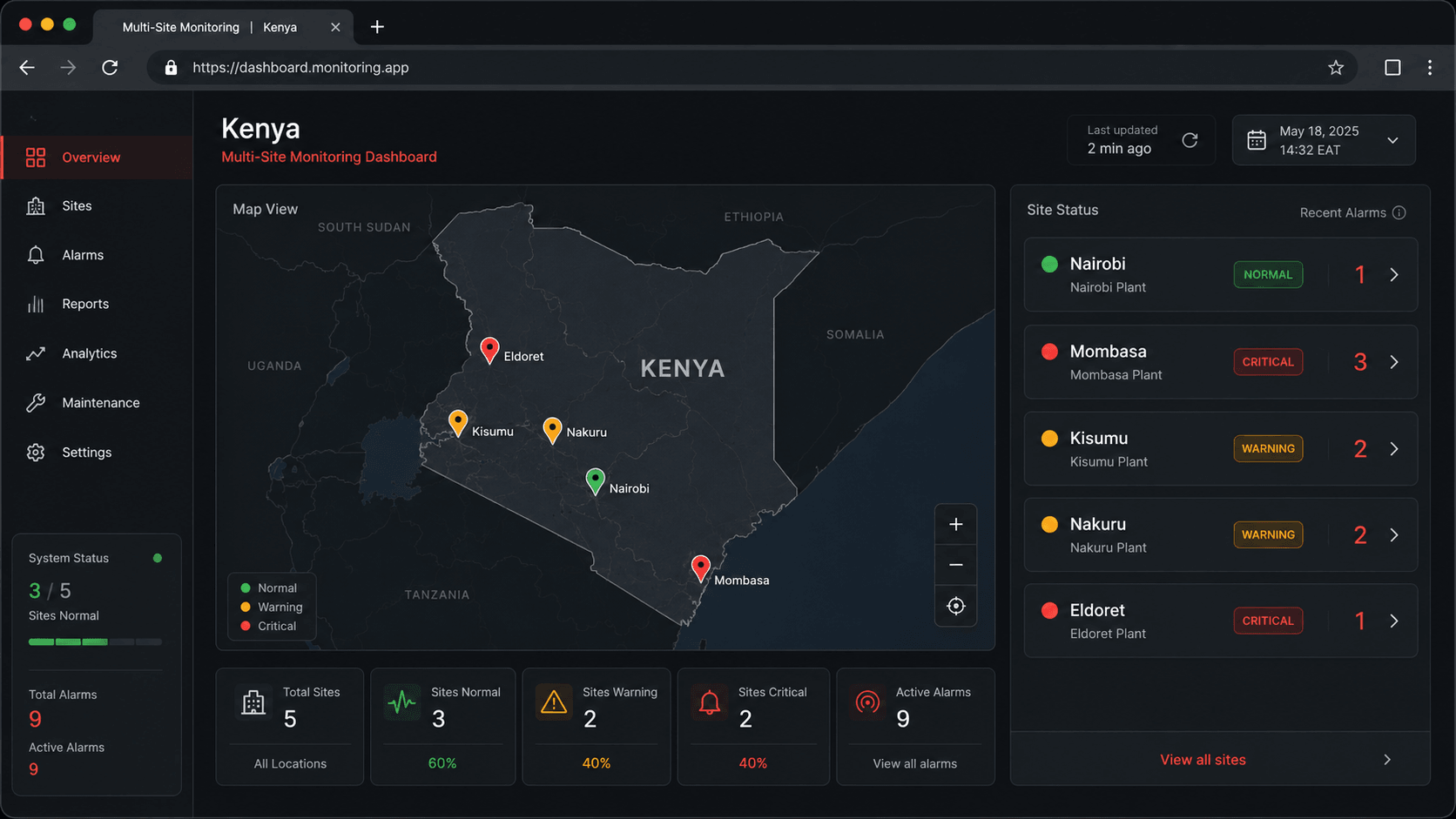
Browser dashboard showing plant sites across East Africa on a map with traffic-light status
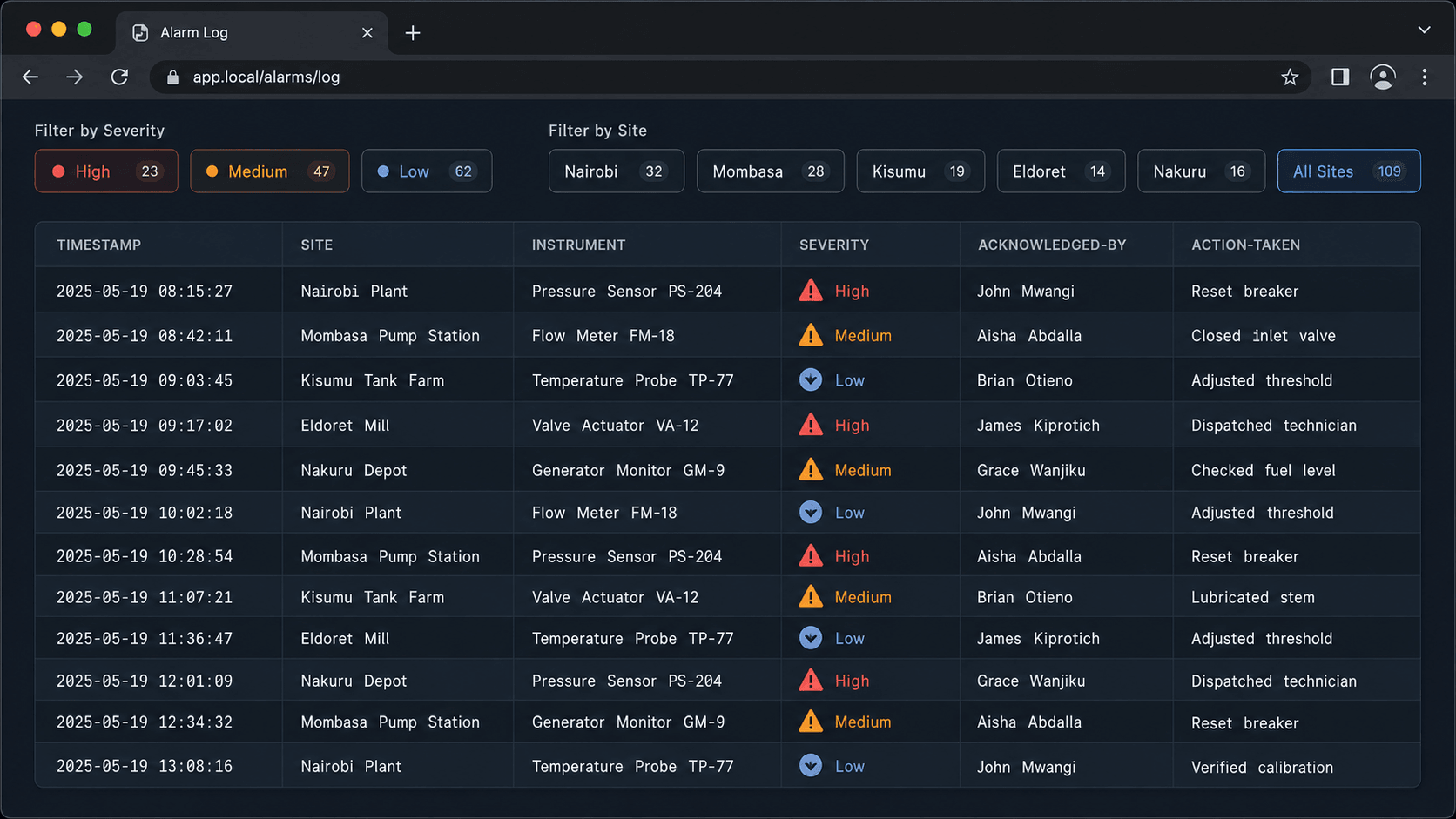
Alarm log
Tabular alarm log with timestamps, sites, severity, acknowledgement state
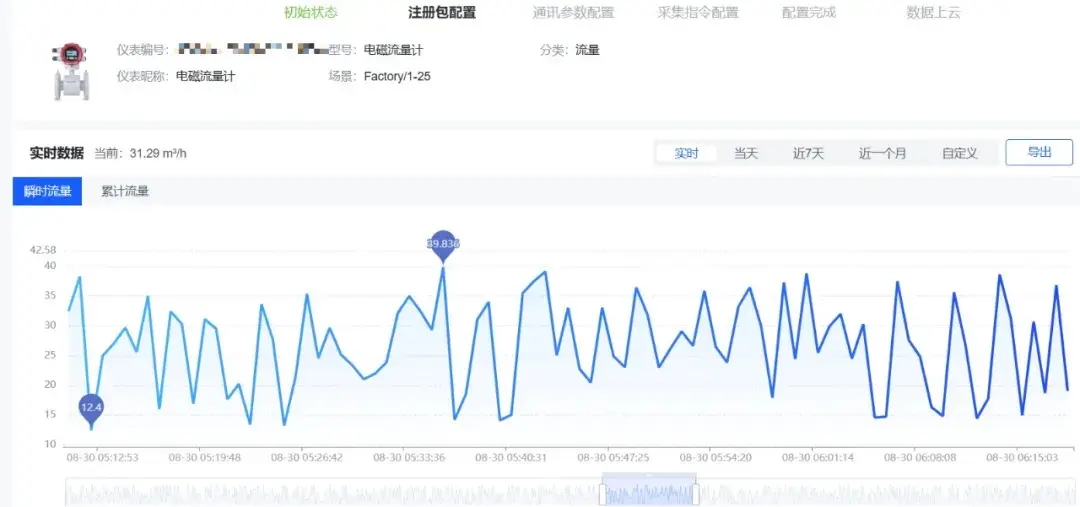
Process trend chart
Time-series chart of process flow rate with rolling 24-hour view and zoom-to-range
Pick the network that fits your site.
Single tank in a remote location? NB-IoT, multi-year battery. Multi-tank brewery with on-prem IT? LoRaWAN with a yard gateway. Plant with existing fibre? Ethernet. We size the radio, not the other way round.
NB-IoT
Primary recommendation for single-tank or low-bandwidth sites. Low power, multi-year battery.
LoRaWAN
Multi-tank sites, on-prem gateway, no carrier dependency.
4G / LTE cellular
High-bandwidth multi-instrument sites with real-time streaming.
Ethernet / Wi-Fi
Plants with existing IT infrastructure, fastest setup.
Any instrument we install can be wired to the app.
- Flow
- Electromagnetic, vortex, turbine, ultrasonic, Coriolis, thermal mass
- Level
- Radar, ultrasonic, hydrostatic, guided-wave
- Pressure
- Gauge, absolute, differential, combined P + T
- Liquid analysis
- pH, ORP, conductivity, DO, turbidity, TSS, multi-parameter
- Temperature
- RTD, thermocouple, programmable transmitters
- System products
- Paperless recorders, indicators, signal isolators
How data handling works for every install.
You decide whether we host the time-series data or push it into your existing systems. Either way, no third-party sharing, audit log on every read, role-based access for everyone with login.
- Transport
- TLS 1.3 in transit
- Storage
- AES-256 at rest
- Access
- Role-based, audit-logged
- Export
- CSV, JSON, Modbus-over-TCP for SCADA integration
- Hosting
- Convex managed, or pushed into your own systems
- Third-party sharing
- None
What buyers ask about remote monitoring.
Should I use NB-IoT or LoRaWAN for tank monitoring?
Where does the data get hosted?
How long does the battery last on an NB-IoT sensor?
Can I see live data on a phone, or only on a laptop?
Instruments and tanks that wire to the app.
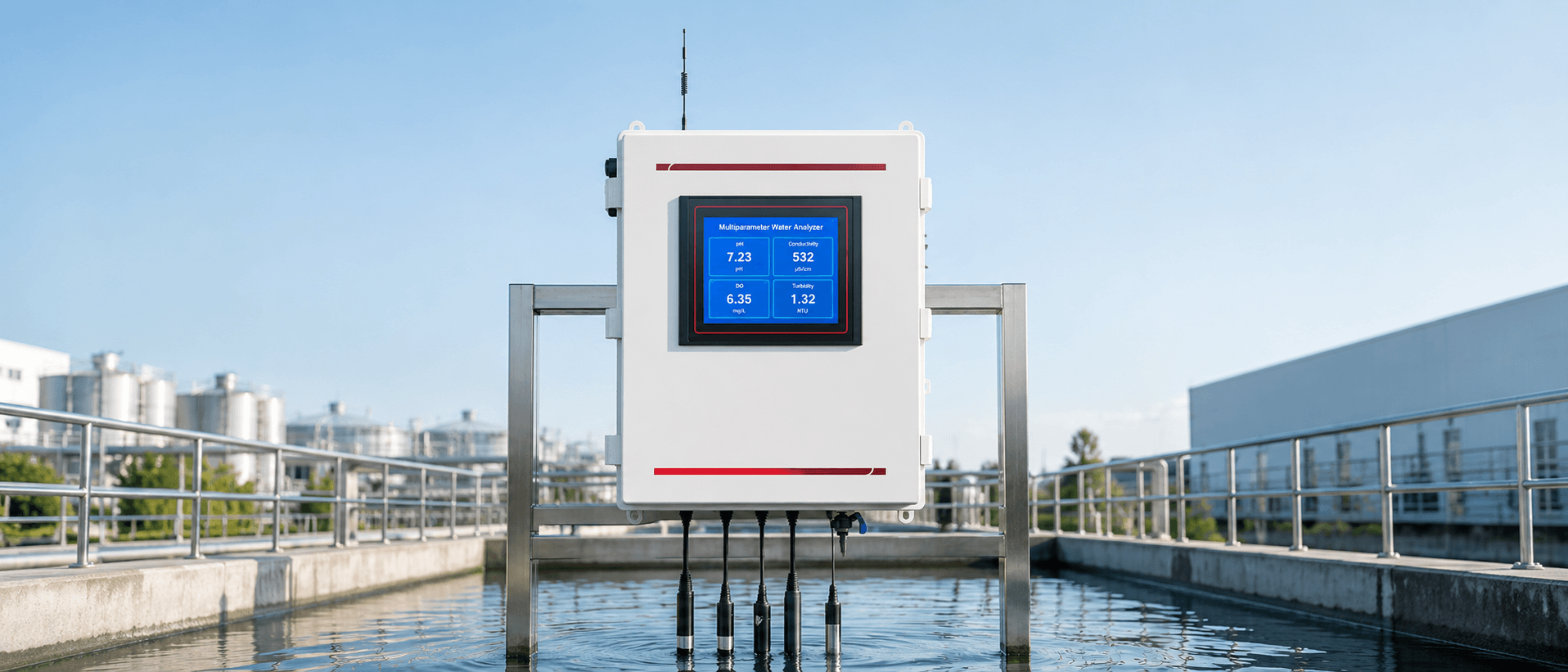
Liquid analysis instruments
pH, ORP, DO, conductivity, turbidity, multi-parameter analyzers. The instruments most ETP dashboards depend on.
Explore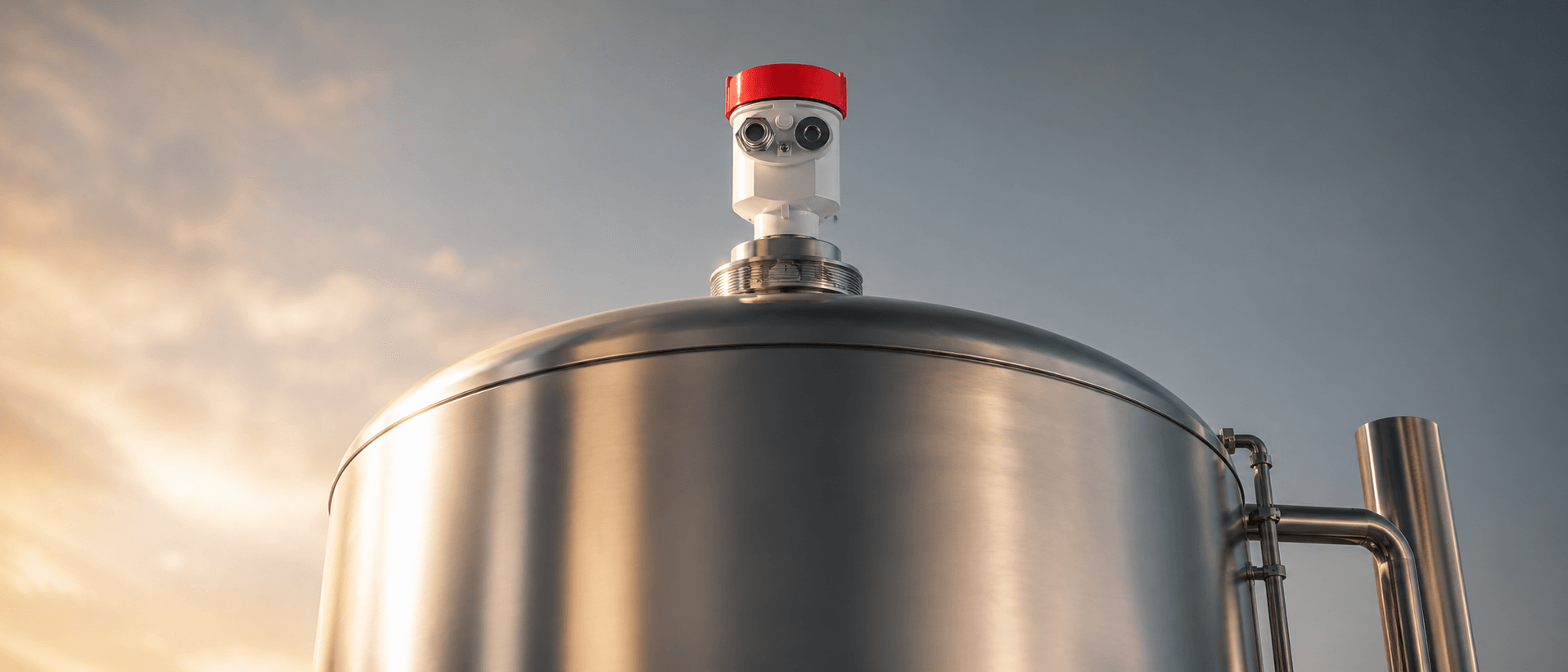
Level transmitters
Radar, ultrasonic, hydrostatic. The level data that drives every tank-monitoring dashboard.
Explore
ETP & water treatment
Where continuous compliance monitoring earns its keep. Regulatory-compliant streaming of every discharge parameter.
Explore