
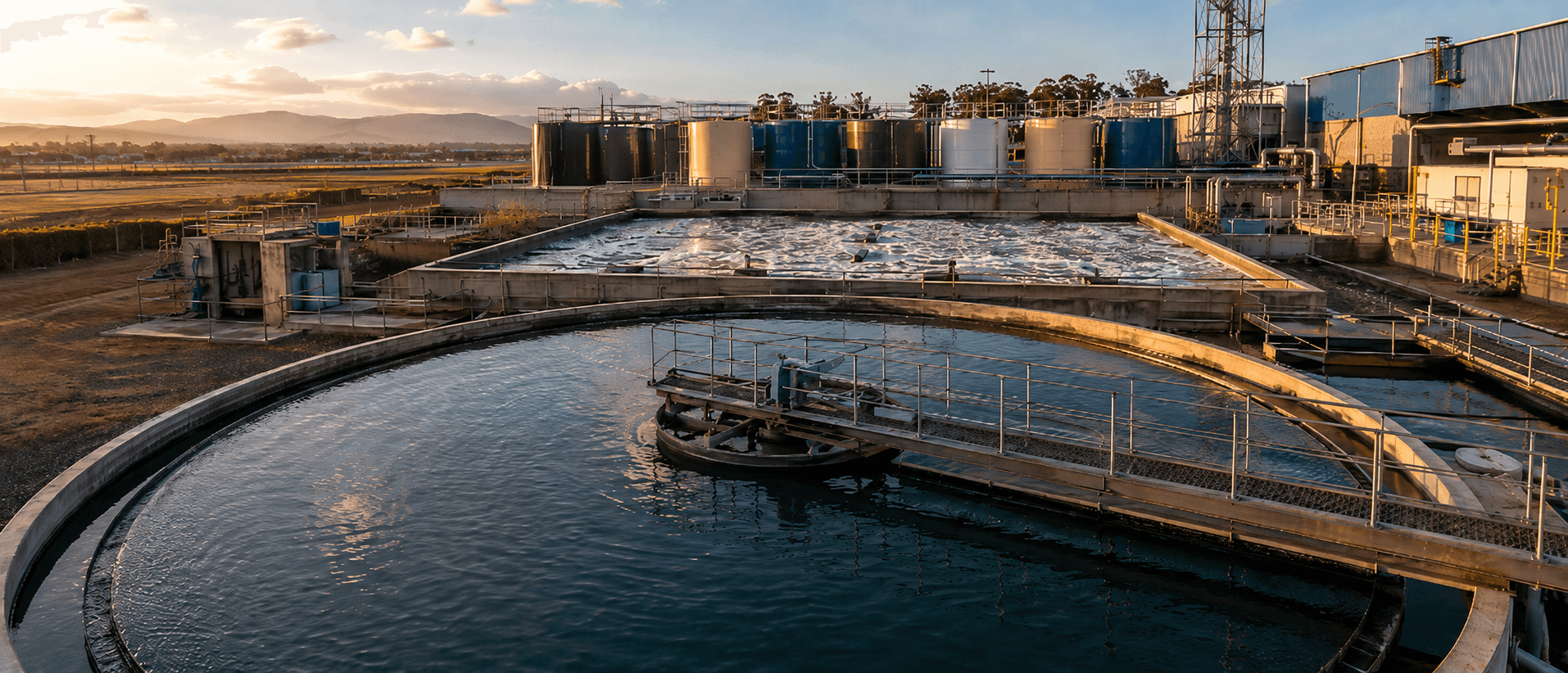
Discharge standards apply to every effluent treatment plant. We supply equipment built to meet them.
A failed inspection can halt production, and donor-funded projects often gate funding on compliance. We supply the tanks, instruments, and analyzers needed to meet discharge standards under national water quality regulations. The full parameters table is set out on this page.
For ETP buyers, compliance is the main requirement.
The other industries buy infrastructure because they're growing. ETP buyers buy infrastructure because they have to. The trigger is almost always external: a regulator inspection that flagged a parameter, a discharge deadline, a donor project that gates on compliance, or a new effluent standard from a sector-specific regulation.
Speed matters here more than in other equipment categories, and so does one question: will this equipment pass the next inspection? Everything on this page is designed to help you answer that with confidence.
Maximum permissible discharge levels.
Designed for the operator preparing for a regulator inspection. First column: parameter. Second: limit for direct environmental discharge. Third: limit for discharge into a public sewer. The two limit sets are different; the right one depends on your discharge route.
| Parameter | Environment | Public sewer | Unit / notes |
|---|---|---|---|
| Biochemical Oxygen Demand (BOD₅) | 30 | 500 | mg/L, 5-day, 20°c |
| Chemical Oxygen Demand (COD) | 50 | 1000 | mg/L |
| Total Suspended Solids (TSS) | 30 | 250 | mg/L |
| pH | 6.5 to 8.5 | 6.0 to 9.0 | |
| Total Nitrogen (TN) | 10 | 20 | mg/L |
| Total Phosphorus (TP) | 2 | 10 | mg/L |
| Ammonia Nitrogen (NH₃-N) | 10 | 20 | mg/L |
| Oil and grease | Nil | 10 | mg/L |
| Conductivity | 1500 | 3000 | µS/cm |
| Temperature | ≤ ambient + 3 | ≤ 40 | °C, above receiving water |
Source: applicable environmental discharge regulations. Limits shown are representative; consult the relevant regulator directly for your sector-specific requirements before construction or commissioning.
What sits between your effluent and the discharge point.
We supply equipment inside the ETP scope. For full-plant design, we work alongside ETP designers; for retrofits and equipment swaps, we work directly with the plant.
- 01
Equalization & primary
Bolted Zinc Aluminium equalization tank, epoxy-lined primary clarifier feeds.
- 02
Aeration & biological
Stainless aeration headers, dissolved oxygen instrumentation, sludge return loops.
- 03
Secondary clarification
Epoxy-lined secondary clarifier, level transmitters for sludge blanket monitoring.
- 04
Tertiary & polishing
Stainless polishing tanks, multi-parameter analyzer for compliance reporting.
- 05
Discharge & monitoring
Electromagnetic flow meter on the discharge line, continuous logging for compliance reporting.
Discharge standards apply to every effluent treatment plant. We supply equipment built to meet them.
Parameters published
10The full discharge limits table is set out on this page for reference.
Expedited ceiling
3 wk2 to 3 weeks on standard equipment under regulator inspection pressure.
Continuous monitoring
24/7Every analyzer we install can stream parameter data to a dashboard, around the clock.
For plants under continuous monitoring obligations, every analyzer we install can stream parameter data 24/7.
Live pH, conductivity, DO, turbidity, and flow rate, with alarm logs you can hand to the regulator on demand. Hosted by us, or pushed into your existing systems. NB- IoT for low-bandwidth sites.
See how remote monitoring works →Streamable parameters
- · pH, ORP
- · Dissolved oxygen
- · Conductivity
- · Turbidity, TSS
- · Ammonia, residual chlorine
- · Flow rate and totaliser
What plant managers ask before a regulator inspection.
What are the discharge limits I have to meet?
How long does an ETP retrofit usually take?
What does an ETP equipment retrofit cost, roughly?
Do you handle continuous compliance monitoring?
The buying frame · ETP & Water Treatment
“Will this equipment pass the next inspection? Everything on this page is designed to help you answer that with confidence.”