
Reading the Kenyan discharge parameters table, for plants that need to pass
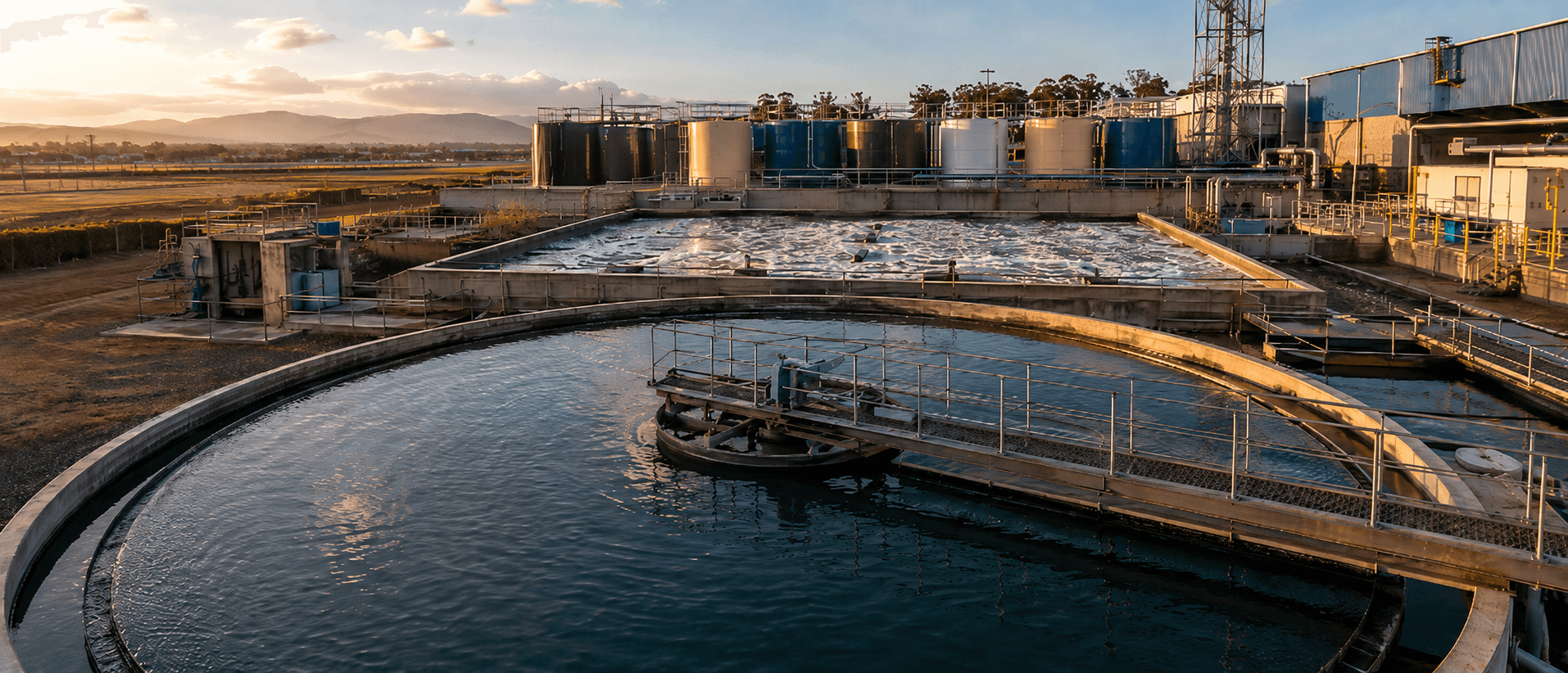
Environmental discharge inspections in Kenya turn on a small set of parameters drawn from the national water-quality regulations. The same parameter list appears on our ETP page; this article walks through what each parameter actually measures and which piece of equipment usually controls it.
BOD₅ and COD: the organic load
Biochemical Oxygen Demand (BOD) measures the oxygen biological organisms need to break down the organic matter in your effluent. Chemical Oxygen Demand (COD) measures the oxygen needed for chemical oxidation of all organic matter, biodegradable or not. COD is therefore always higher than BOD; the ratio between them tells you how biodegradable your effluent is.
The Kenyan discharge limit for BOD is 30 mg/L (environment) or 500 mg/L (public sewer); for COD it is 50 mg/L (environment) or 1000 mg/L (public sewer). The equipment that hits these limits is the biological treatment stage of your ETP: aeration basins, activated-sludge reactors, or sequencing batch reactors.
TSS: the suspended solids
Total Suspended Solids (TSS) measures particulates that do not settle quickly. The Kenyan limits: 30 mg/L (environment), 250 mg/L (public sewer). Controlled at the clarifier (gravity settling), DAF unit (dissolved-air flotation), or the tertiary-stage filter.
pH: the acidity / alkalinity
The Kenyan regulator expects 6.5 to 8.5 for environmental discharge, 6.0 to 9.0 for sewer discharge. Controlled via dosing of caustic (sodium hydroxide) or acid (sulphuric or hydrochloric) at the neutralisation stage. The right instrument is a continuous pH sensor with PID-controlled dosing pumps.
Nutrients: TN, TP, and NH₃-N
Total Nitrogen, Total Phosphorus, and Ammonia Nitrogen are nutrient parameters. Excess nutrients in a receiving water body drive algal blooms. The Kenyan limits sit in the low single-digits to low-tens of mg/L. Controlled via biological nutrient removal (BNR) stages, which is to say, longer retention times and specific aerobic / anoxic zoning in the aeration train.
The instrumentation that proves it
You cannot manage what you do not measure. The single most useful instrument on an ETP is the multi-parameter analyzer at the discharge point: pH, conductivity, DO, turbidity, and temperature in one panel, logged continuously, exportable for compliance reporting. We supply these on every ETP project we touch. See the liquid analysis instruments page for the supplied range.
How we approach an ETP inspection
If you have an inspection scheduled, the right starting point is a baseline measurement of all 10 parameters at your current discharge point. From there we know which stages of the train need attention and which equipment retrofits will move the needle on which parameter. The audit takes one day on-site; the brief lands inside a week.
Choosing a flow meter for a Kenyan industrial loop
Electromagnetic, vortex, ultrasonic, Coriolis, or thermal-mass? The medium, the pipe size, and the accuracy you actually need decide which one belongs on the line.
Read26 May 2026In-house structural fabrication: pipe racks, tank supports, walkways
Tanks and silos don't stand alone. The platforms, racks, and supports around them are usually the load-bearing schedule risk. Here is how we approach the rest of the steel.
Read26 May 2026How to specify a stainless tank for a Kenyan F&B plant
Material grade, surface finish, sanitary fittings, and the questions your fabricator wishes you'd ask first.
Read