
Zinc Aluminium vs carbon steel: the 20-year math, for Kenyan operators
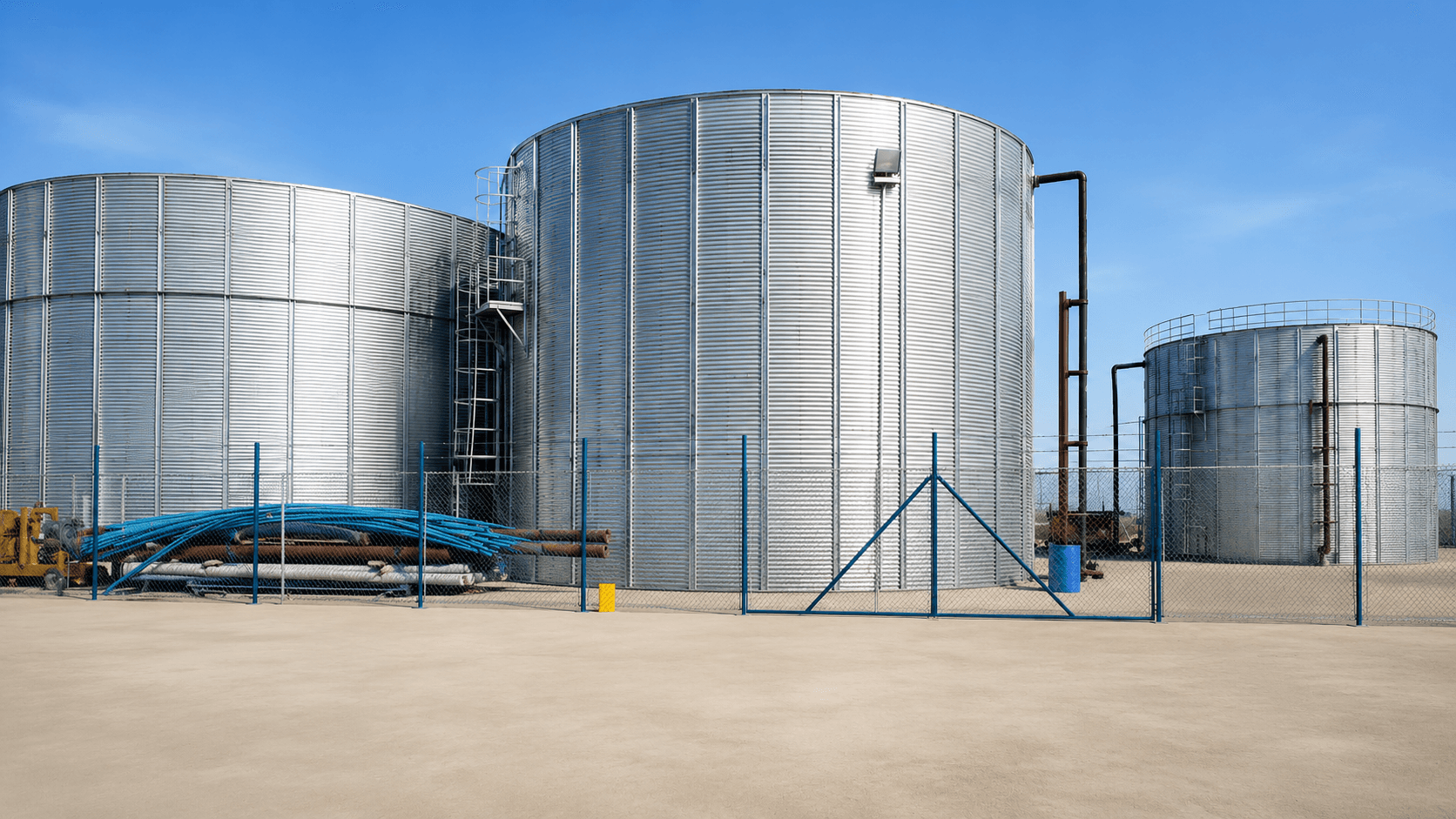
The default answer for bulk industrial water storage in Kenya is "carbon steel because it is cheapest." The default answer is wrong above roughly 200 cubic metres of capacity, and we publish the math because nobody else does.
Bare carbon steel in humid conditions
Untreated carbon steel in high-humidity conditions reaches end of life in eight to twelve years. Coatings (paint or epoxy) buy you three to five years per coat, so a coated carbon-steel tank needs recoating two to three times per decade.
Each recoat means draining the tank, isolating the supply line, surface-prepping the interior, applying the coating system, and curing. That is one to two weeks of plant downtime plus the recoat cost. Over a twenty-year horizon, that adds up to four to six recoat cycles, or roughly eight to twelve weeks of accumulated downtime.
Bolted Zinc Aluminium, same horizon
Zinc Aluminium steel (55 percent aluminium, 43.5 percent zinc) forms a self-healing barrier coating. At any cut or scratch, the zinc sacrificially protects the steel underneath. Service life in unsheltered outdoor conditions runs to twenty years and beyond, with no recoating required during the design life. The tank is supplied with a liner as standard, so the water-contact surface is protected from day one.
At our typical tank sizes above 200 cubic metres, the initial cost premium over carbon steel is in the range of fifteen to twenty-five percent. At the twenty-year mark, the math swings hard in favour of Zinc Aluminium:
- Carbon steel: 1 to 2 full replacement cycles in 20 years, 8 to 12 weeks accumulated downtime, plus recoat labour every 3 to 5 years.
- Zinc Aluminium: 1 install, 0 recoats, zero replacement downtime over the same horizon.
The exception worth noting
Carbon steel still wins under one hundred cubic metres of capacity, where the Zinc Aluminium bolted-panel economics do not land yet. We quote both options openly when a tank sits on the boundary; the right answer depends on your replacement tolerance and your downtime cost.
The longer version of this argument, plus a spec sheet for the Zinc Aluminium range, lives on the Zinc Aluminium tanks page.
Choosing a flow meter for a Kenyan industrial loop
Electromagnetic, vortex, ultrasonic, Coriolis, or thermal-mass? The medium, the pipe size, and the accuracy you actually need decide which one belongs on the line.
Read26 May 2026In-house structural fabrication: pipe racks, tank supports, walkways
Tanks and silos don't stand alone. The platforms, racks, and supports around them are usually the load-bearing schedule risk. Here is how we approach the rest of the steel.
Read26 May 2026How to specify a stainless tank for a Kenyan F&B plant
Material grade, surface finish, sanitary fittings, and the questions your fabricator wishes you'd ask first.
Read